ABOUT
About Curanz Sounds: who makes it and how the charts are calculated
Curanz Sounds is designed, written and run by artist Kotaro Asahina. There are no fortune-tellers here. Each chart is calculated from published formulas and the classical rules of its tradition, and each recording is original.
Kotaro Asahina, the artist behind Curanz Sounds
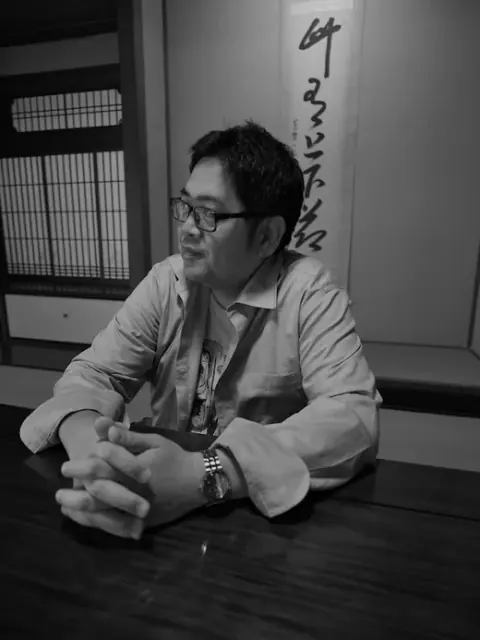
Kotaro Asahina
Artist and founder of Kuon R&D
- A pianist who studied the folk music of the world at a college of music.
- He studied improvisation in Sweden, and album production and acoustics in Cologne, Germany.
- Back in Japan he has recorded tango, classical and early music performances.
- He founded Kuon R&D, which makes tools for musicians, and he builds and writes Curanz Sounds himself.
- He does not give private readings. Müri, the guide created by artist Kotaro Asahina, is the voice of the readings.
How the Curanz Sounds birth chart is calculated
The birth chart places the Sun, the Moon and eight planets for your birth moment, then draws the houses for your birthplace.
Sun and Moon
The positions of the Sun and the Moon, sidereal time and the tilt of the ecliptic follow Jean Meeus, Astronomical Algorithms, second edition.
Mercury to Pluto
The planets use the approximate Keplerian elements published by NASA JPL (E. M. Standish), which cover the years 1800 to 2050.
Accuracy
About 0.01 degrees for the Sun, 0.05 for the Moon, 0.02 for Mercury to Mars, 0.2 for Jupiter to Neptune and 0.3 for Pluto. Every position is shown to the degree and minute, so you can see when a planet sits close to the edge of a sign.
Zodiac and houses
The tropical zodiac and Placidus houses. Above 66 degrees of latitude, where Placidus houses cannot be drawn, the chart uses equal houses.
Time zones and daylight saving time
Each birthplace carries its time zone region, such as America/New_York. The offset from UTC is looked up for your exact birth date and time, so daylight saving time and past changes to local time are included. The offset used is shown with your chart.
Birthplaces
The list holds 69,563 towns of about 5,000 people and up in 244 countries and territories, with their coordinates. The data comes from GeoNames (geonames.org), licensed under CC BY 4.0.
Four Pillars, I Ching, numerology and tarot: where the readings come from
Curanz Sounds reads each tradition by its own classical rules, so the same birth details give the same chart every time.
Four Pillars (BaZi)
The year, month, day and hour pillars are read from the Chinese calendar, where the months turn at the solar terms. The readings draw on two classics of the Ziping tradition, the San Ming Tong Hui and the Yuanhai Ziping.
I Ching
The 64 hexagrams keep their order in the received text, the King Wen sequence. The images of the eight trigrams follow the Shuogua, and a cast uses the coin values 6, 7, 8 and 9, where 6 and 9 are the changing lines that give the second hexagram.
Numerology and tarot
The life path number uses the Pythagorean method and your date of birth. A one card tarot draw uses the 22 cards of the Major Arcana, and the same question can be drawn once a day.
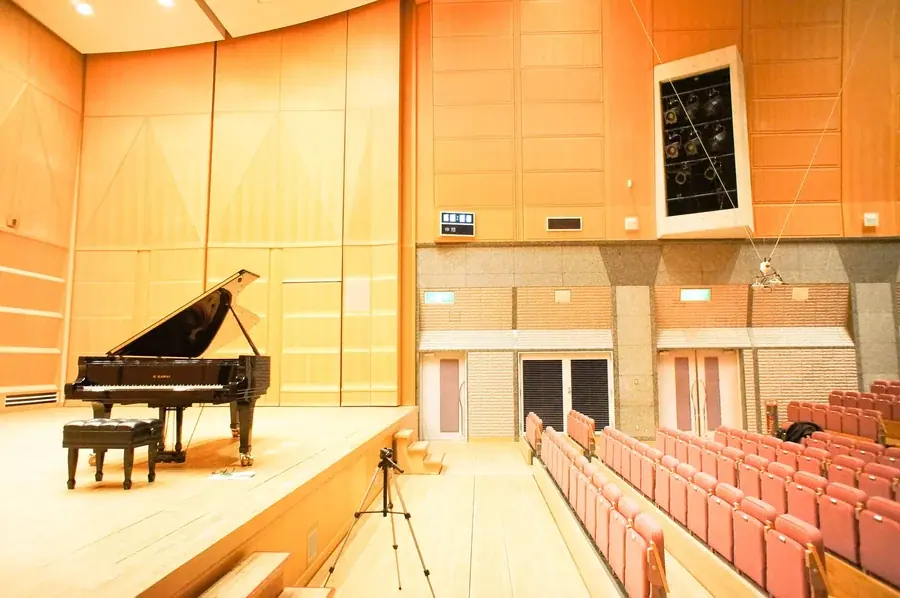
The Curanz Sounds recordings: 432 Hz piano and solfeggio tones
432 Hz piano
The pieces are played on a piano tuned to A = 432 Hz. Measured from the master recordings, all 13 works come out at 432.1 to 432.2 Hz.
Solfeggio frequencies
Each of the nine tones, from 174 Hz to 963 Hz, is the center of an original 30 minute piece made for Curanz Sounds.
Your birth details stay on your device
The English tools need no account. The date, time and place you enter are used for the calculation inside your browser and are kept only on your device, where you can clear them at any time.